Mark designs logos for businesses in his city the same way a good mechanic tunes an engine: methodically, with an eye for the little details nobody else notices. If you’ve ever wondered what actually happens between "we need a logo" and a finished brand mark on your storefront, this is that behind-the-curtain look. Spoiler: it’s less magic marker, more strategy plus a healthy dose of 90s-kid creativity.
A logo isn’t just a pretty picture — it’s a visual shorthand for trust, according to guidance from the AIGA, the professional association for design. Businesses across Marion, Alachua, and Lake counties hire local designers like Mark precisely because a logo made for a national template farm rarely fits a hometown brand. This guide walks through the real process, the costs, the mistakes, and what to expect when a local logo designer builds your brand mark from scratch.
📌 Key Takeaways
- A strong logo balances simplicity, relevance, and memorability — not just "looking cool."
- Local logo design factors in how your mark performs on signage, apparel, and vehicles across your actual service area.
- Expect 2-4 weeks for a professional logo design process, including revisions.
- Trademark research matters — a logo that’s legally clear saves headaches later.
- Your logo should work in one color, at business-card size, before it ever hits a billboard.
Jump to a Section
- What It Really Means When Mark Designs Logos
- Why Local Logo Design Beats Generic Templates
- The Step-By-Step Design Process
- Common Logo Design Mistakes to Avoid
- Logo Design Costs: What to Expect
- Frequently Asked Questions
What It Really Means When Mark Designs Logos
Quick Answer: Mark designs logos for businesses in his city by combining brand strategy, local market knowledge, and hands-on craft — not just software filters. Every project starts with questions, not sketches.
Before a single line gets drawn, there’s a conversation. What does this business actually do? Who walks through the door? What do competitors in Ocala or Gainesville already look like? Skipping this step is the number-one reason logos flop within a year.
Understanding the Brief
A design brief is the roadmap for the whole project — it’s the document that captures goals, audience, and must-haves before any artwork happens. Mark treats this like a contractor treats blueprints: skip it, and the whole structure gets shaky later.
💡 Expert Insight: The best logos start as sentences, not sketches. If you can’t describe your brand in one clear line, the logo will struggle to communicate it visually.
Sketching and Concept Development
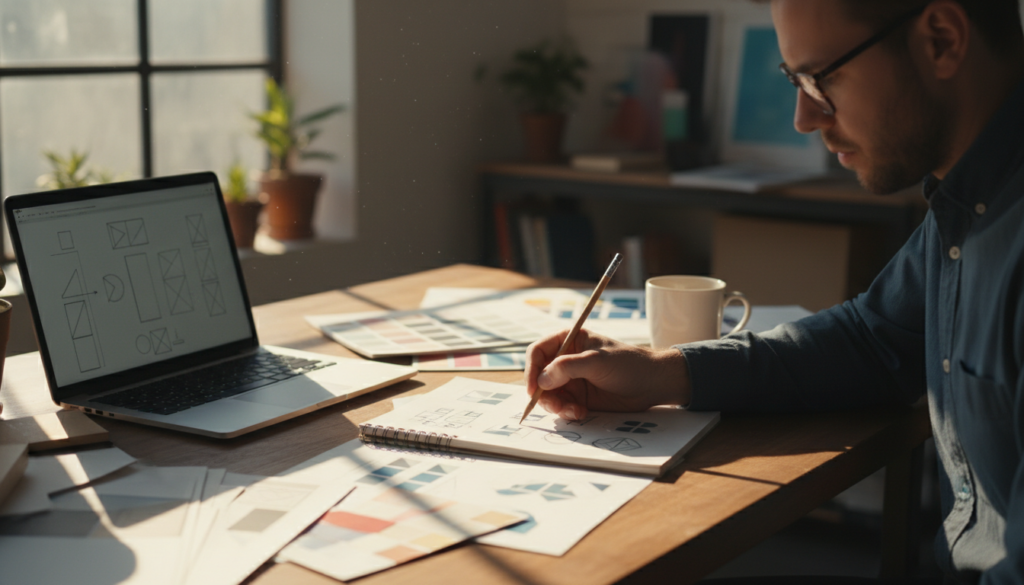
Once the brief is locked, concepting begins — usually three to five rough directions instead of one "perfect" idea. This range lets a business owner in Belleview or Leesburg react honestly instead of settling for the only option on the table.
Why Local Logo Design Beats Generic Templates
Quick Answer: A logo designer who lives and works in your area understands local signage codes, seasonal events, and the visual competition on your specific street — a template site never will.
Generic logo generators pump out thousands of near-identical marks a day. That’s fine for a hobby blog, but risky for a business trying to stand out in a crowded strip mall in Winter Garden or a growing downtown in Mount Dora. Local designers see how your logo will actually be used — on a vinyl banner, a polo shirt, a vehicle wrap — before it’s finalized.
Real Scenario: A Dunnellon Feed Store
A feed store owner near Dunnellon once brought in a template logo that looked sharp on a screen but turned muddy the moment it was embroidered onto a cap. Because embroidery can’t reproduce fine gradients, the fix meant simplifying the mark into flat shapes that still read clearly at two inches wide. That’s the kind of adjustment only comes from testing a design across real, physical branded products — not just a screen.
⚠️ Common Mistake: Approving a logo only on a laptop screen. Always test it small (a pen), large (a banner), and in one color before final sign-off.
Building for Multiple Applications
A logo has to survive far more than a website header. It needs to hold up on vinyl signs, embroidered polos, and even laser-etched drinkware. Designing with those end uses in mind from day one avoids costly redesigns later.
The Step-By-Step Design Process
Quick Answer: A professional logo design process generally runs through five stages: discovery, concepting, refinement, finalization, and file delivery — typically two to four weeks start to finish.
Here’s what that actually looks like in practice:
- Discovery call — goals, audience, competitors, and budget get discussed openly.
- Concept development — three to five distinct directions are sketched and presented.
- Client feedback round — the business owner picks a direction or blends favorite elements.
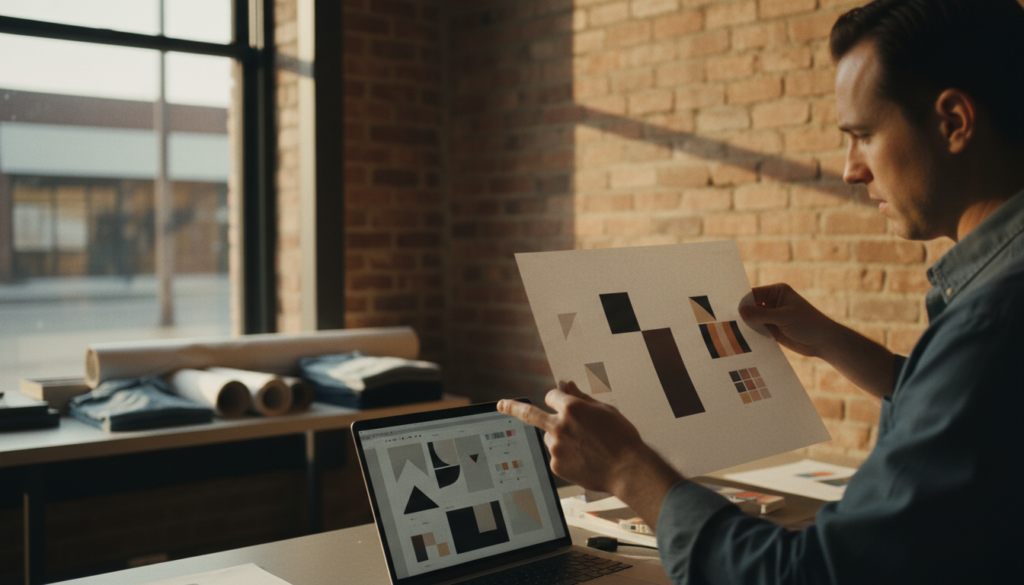
- Refinement — color, typography, and spacing get tightened based on feedback.
- File delivery — final logo files arrive in formats ready for print, web, and embroidery digitizing.
Trademark and Originality Checks
A logo that accidentally copies an existing trademark can cause real legal trouble down the road. According to the United States Patent and Trademark Office, a quick trademark search before launch is one of the cheapest forms of insurance a small business can buy. It’s a step that’s easy to skip and expensive to regret.
📊 Data Point: The Small Business Administration notes that consistent branding — logo, colors, and messaging — is a core building block of a credible small business identity, alongside solid financial and legal fundamentals.
Color and Typography Choices
Color psychology gets a lot of buzz, but the practical rule is simpler: pick colors that print, embroider, and etch cleanly. Metallics and neon tones look great digitally but can shift dramatically on laser engraving or vinyl. Typography should stay legible even shrunk down to a favicon size.
Common Logo Design Mistakes to Avoid
Quick Answer: Most failed logos share the same three flaws: too much detail, too many colors, and no testing across real materials before launch.
A logo crammed with fine linework might look impressive on a monitor, but it turns to mush the moment it’s printed on a small pen or embroidered on a cap. Simplicity isn’t a compromise — it’s the whole point.
Table: DIY Logo Tools vs. Working With a Local Designer
| Factor | DIY Template Tool | Local Logo Designer |
|---|---|---|
| Uniqueness | Often reused by other businesses | Custom, one-off concept |
| Trademark check | Rarely included | Recommended step before launch |
| Multi-material testing | Not tested | Checked on apparel, signage, print |
| Revisions | Limited or self-service | Guided feedback rounds |
| Turnaround | Instant | Typically 2-4 weeks |
| File formats delivered | Basic PNG/JPG | Vector files for all uses |
✅ Quick Tip: Always ask for vector file formats (like .AI or .EPS) with your final logo. Raster files (JPG, PNG) will pixelate the moment they’re enlarged for a billboard or banner.
Ignoring Brand Consistency
A logo is only step one. It has to work alongside consistent fonts, colors, and messaging across every touchpoint — from print services to embroidered uniforms. Businesses that skip this step often end up looking like three different companies across their marketing.
Logo Design Costs: What to Expect
Quick Answer: Professional logo design typically ranges from a few hundred to a few thousand dollars, depending on the scope, number of concepts, and whether a full brand identity system is included.
Pricing varies widely because "logo design" can mean a single mark or a full identity package with color palettes, fonts, and usage guidelines. A business in The Villages opening its first location has different needs than an established company in Ocala rebranding after a decade.
When a Refresh Makes More Sense Than a Full Redesign
Not every business needs to start from zero. Sometimes a modernized version of an existing mark — cleaner lines, updated colors — accomplishes the goal without losing brand recognition built over years. This distinction is covered in more depth in our brand refresh vs. rebrand breakdown.
💡 Expert Insight: If people already recognize your logo but it feels dated, a refresh usually costs less and protects the equity you’ve already built with customers.
A note on limitations: no designer, however experienced, can guarantee a logo will "go viral" or single-handedly boost sales. A logo is one piece of a broader brand system that includes signage, apparel, print materials, and consistent messaging — the complete branding guide for Florida businesses covers how those pieces fit together.
Frequently Asked Questions
Why does Mark design logos for businesses in his city instead of outsourcing overseas?
Working locally means faster feedback loops, in-person proofing, and a designer who actually sees how the logo performs on real signage and apparel around town. It also means someone accountable is nearby if adjustments are needed later.
How much does it cost when Mark designs logos for businesses in his city?
Costs typically range from a few hundred dollars for a simple mark to a few thousand for a full brand identity system with guidelines. The final price depends on the number of concepts, revisions, and deliverables included.
How long does a professional logo design process take?
Most projects run two to four weeks from the initial discovery call to final file delivery. Rush timelines are sometimes possible but can limit the number of concept rounds.
What file formats should I receive with a finished logo?
You should receive vector formats like .AI or .EPS alongside standard PNG and JPG files. Vector files let you resize the logo for anything from a pen to a billboard without losing quality.
Can an existing logo be updated instead of replaced completely?
Yes, this is called a brand refresh and it preserves recognizable elements while modernizing color, type, or line work. It’s often a smart middle ground when a business has built real recognition around its current mark.
Does a small business really need a trademark search before using a new logo?
A basic search through the USPTO database is a low-cost way to avoid conflicts with existing registered marks. Skipping it can lead to costly rebranding later if a conflict surfaces after launch.
Will a new logo automatically look good on shirts, hats, and signage?
Not without testing — a logo has to be checked across the actual materials it will appear on, including embroidery, vinyl, and print. This is why local designers often review proofs on real products before final approval.
Final Thoughts
When Mark designs logos for businesses in his city, the goal is never just a pretty graphic — it’s a mark that holds up on a banner, a cap, a storefront sign, and everything in between. The process takes strategy, testing, and a little patience, but it protects a business from costly redesigns down the road. Whether you’re opening a first location in Leesburg or refreshing a decades-old brand in Gainesville, the fundamentals stay the same: clarity, simplicity, and real-world testing.
Ready to move forward? Here’s the practical next step:
- Gather examples of logos you like and dislike, and note why.
- List every place your logo needs to appear — signage, apparel, vehicles, packaging.
- Reach out for a discovery conversation about your brand goals and budget.
- Review concepts and choose a direction with confidence.
Start your project today by visiting our custom logo design services page and let’s build a mark your city will actually remember.